
Jet Star Signs

Jet Star Signs graphic on how long commercial signs last with a worker on a ladder at a storefront sign

How Long Do Commercial Signs Last? Lifespan Guide

When you invest in a commercial sign, you are not only buying something that looks good; you are investing in the visibility of your business. One of the most common questions business owners ask is, “How long will my sign last?” It is a fair question, especially when signs are exposed to sun, wind, rain, and daily wear.

Commercial signs can last a long time, but only with the right materials and proper maintenance. Here is a clear explanation of how long signs last and how to get the most from yours.

Average Lifespan of Commercial Signs

There is no single lifespan that applies to every sign. How long a sign lasts depends on its type, its materials, and the environment where it is installed.

A well-made commercial sign can last roughly 7 to 15 years, and some last longer with good maintenance. Outdoor signs wear faster than indoor signs, but modern materials and LED lighting have significantly extended sign lifespans.

How Different Sign Types Hold Up Over Time

  • Channel letter signs are known for durability. The letters are usually made of aluminum and acrylic, which resist rust and fading, and each letter is built individually. With LED lighting, these signs can stay bright for many years.
  • Cabinet signs are also long-lasting when they are built with strong frames and good lighting. The printed face can be replaced over time, while the rigid structure stays in place.
  • Digital and LED message signs are different. The sign structure may last for many years, but the electronic components may need to be updated or repaired much sooner, particularly in high-traffic areas.

What Affects the Lifespan of a Commercial Sign?

Several factors determine how long a sign lasts.

  • Weather. Signs exposed to strong sun, heavy rain, or extreme temperatures do not last as long as signs in sheltered spots. You can check conditions in your area with the National Weather Service.
  • Quality of installation. A sign that is poorly installed can shift, shake, or develop electrical problems, which shortens its life. This is why professional installation is just as important as the sign itself.
  • Maintenance. A sign that is checked and cleaned regularly will almost always outlast one that is ignored.

Simple Maintenance Tips That Make Signs Last Longer

Maintenance does not have to be complicated or costly. Even small tasks help keep your sign presentable and in good working order:

  • Clean the sign surface to remove dirt and dust.
  • Check the lighting regularly and replace dim or failed LEDs.
  • Inspect electrical connections for safety.
  • Look for cracks, fading, or loose parts.
  • Schedule professional inspections when needed.

These simple steps prevent small issues from turning into major repairs.

When Should You Repair or Replace a Sign?

Not every sign problem calls for a full replacement. If the structure is sound and the design still suits your brand, repairs are often enough. Replacing the lighting, renewing panels, or restoring colors can extend the life of a sign by many years.

If your sign is outdated, hard to read, or no longer reflects your brand, it may be time to upgrade. Current signs are more visible, use less energy, and look more contemporary.

Why LED Signs Last Longer Than Older Signs

LED technology is one of the main reasons modern signs last longer. LEDs use less power, produce less heat, and have much longer lives than conventional lighting. That means fewer failures, lower maintenance costs, and better long-term performance. For many businesses, LED signage has reduced long-term costs while improving visibility.

Commercial signs are built to last, but how long they last depends on quality, environment, and maintenance. With the right materials and regular attention, your sign will serve your business for many years.

Think of your sign as a long-term business partner. When you look after it, it keeps advertising your brand 24 hours a day. A good sign is not only one that lasts longer, but one that keeps making a good first impression.
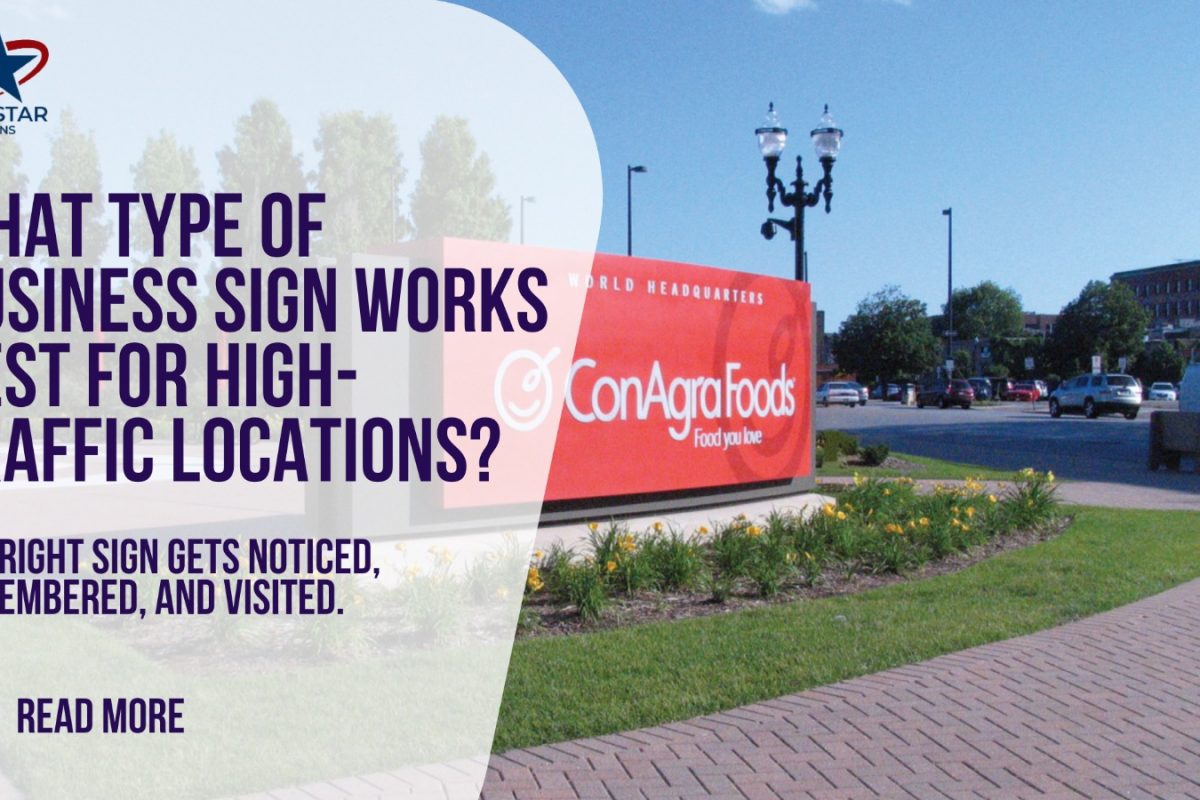
Jet Star Signs graphic on choosing business signs for high-traffic locations with a monument sign

Best Business Signs for High-Traffic Locations

High-traffic locations are a big opportunity and a big challenge. When hundreds or even thousands of people pass your business each day, you have only a few seconds to grab their attention. Drivers are moving at speed, pedestrians are distracted, and many people are looking at their phones.

That is why it is so important to choose the right business sign for a busy area. The wrong sign gets ignored. The right sign is noticed and remembered, and it brings people through your door.

Here is a simple guide to choosing the best sign for your business.

Why High-Traffic Areas Need the Right Sign

On major roads, shopping streets, intersections, and highways, people do not have time to stop and read your sign. Your message must be readable, visible, and easy to understand, day and night.

A good sign in a high-traffic location should:

  • Be easy to read from a distance
  • Stand out from surrounding signs
  • Look professional and trustworthy
  • Catch attention quickly, without confusion

If your sign is too small, too detailed, or poorly lit, people will miss it, no matter how good your business is.

Signs That Work Best in High-Traffic Locations

Not every sign performs well in a busy setting. Some look good up close but fade into the background from a distance. The signs below are designed to handle speed, movement, and visual noise:

  • Cabinet signs: These glow evenly and read well from far away. They are especially effective along highways, major roads, and open business districts.
  • Large channel letter signs: Oversized, brightly lit channel letters make a strong impression without looking cheap or dated.
  • Pylon signs: These tall, freestanding signs rise above the road and surrounding structures, which suits shopping centers and roadside businesses.
  • Monument signs: These wide, low-profile signs sit close to entrances and work well where a lot of vehicles are entering an area.
  • LED message signs: These let you change messages and promotions, which helps attract repeat attention in crowded areas.

What Makes a Business Sign Effective in Heavy Traffic?

Simple is almost always better in high-traffic areas. Long messages and fancy details do not work when people are in a hurry. The best signs focus on clarity and visibility.

Size matters more than most people expect. Something that looks large up close can look small from the other side of the road. Lighting is important too, particularly at night or in bad weather.

The choice of font also matters. Bold, plain fonts are easy to read at a glance, and strong contrast between text and background keeps the message from blending in.

Should You Focus More on Visibility or Branding?

In high-traffic places, visibility comes first. Until people can read your sign quickly, branding does not matter. Once visibility is solved, you can build your brand on top of it.

That is why many businesses use a combination approach. For example, an oversized cabinet or pylon sign gets attention from the road, while channel letter signs on the building carry the brand. In this way, everyone on the road can see you well before they reach you, and people who come closer learn who you are.

This approach works especially well for restaurants, retail stores, medical offices, and service-based businesses.

Common Mistakes Businesses Make

A big mistake is saying too much. A sign is not a brochure; the business name, the logo, and perhaps one short message are enough.

Another mistake is choosing style over function. A modern design can look fantastic, but it still has to be readable at speed. High-traffic signs need to work on the road, not only in the design preview.

The Bottom Line

In a high-traffic location, the best business sign is clear, bold, and visible from a distance. Cabinet signs, large channel letters, pylon signs, and LED displays can all work well when they are chosen for the right reasons.

The key is to know where you are, how fast people are traveling, and how far away you want people to see your sign. A sign that works will bring you real customers, because the traffic is already passing by. For more on how signs perform in busy areas, see the International Sign Association.

1 2 3 … 7